Carl M. Bender, Daniel W. Hook
The PT-symmetric Hamiltonian \(H=p^2+x^2(ix)^\epsilon\) (\(\epsilon\) real) exhibits a phase transition at \(\epsilon=0\). When \(\epsilon\geq0$\) the eigenvalues are all real, positive, discrete, and grow as \(\epsilon\) increases. However, when \(\epsilon<0\) there are only a finite number of real eigenvalues. As \(\epsilon\) approaches -1 from above, the number of real eigenvalues decreases to one, and this eigenvalue becomes infinite at \(\epsilon=-1\). In this paper it is shown that these qualitative spectral behaviors are generic and that they are exhibited by the eigenvalues of the general class of Hamiltonians \(H^{(2n)}=p^{2n}+x^2(ix)^\epsilon\) (\(\epsilon\) real, n=1, 2, 3, …). The complex classical behaviors of these Hamiltonians are also examined.
http://arxiv.org/abs/1205.4425
High Energy Physics – Theory (hep-th); Mathematical Physics (math-ph); Quantum Physics (quant-ph)
Alexander G. Anderson, Carl M. Bender
This paper examines the complex trajectories of a classical particle in the potential \(V(x)=-\cos(x)\). Almost all the trajectories describe a particle that hops from one well to another in an erratic fashion. However, it is shown analytically that there are two special classes of trajectories \(x(t)\) determined only by the energy of the particle and not by the initial position of the particle. The first class consists of periodic trajectories; that is, trajectories that return to their initial position \(x(0)\) after some real time \(T\). The second class consists of trajectories for which there exists a real time \(T\) such that \(x(t+T)=x(t) \pm2 \pi\). These two classes of classical trajectories are analogous to valence and conduction bands in quantum mechanics, where the quantum particle either remains localized or else tunnels resonantly (conducts) through a crystal lattice. These two special types of trajectories are associated with sets of energies of measure 0. For other energies, it is shown that for long times the average velocity of the particle becomes a fractal-like function of energy.
http://arxiv.org/abs/1205.3330
High Energy Physics – Theory (hep-th); Mathematical Physics (math-ph); Quantum Physics (quant-ph)
Carl M. Bender, Daniel W. Hook, S. P. Klevansky
The non-Hermitian PT-symmetric quantum-mechanical Hamiltonian \(H=p^2+x^2(ix)^\epsilon\) has real, positive, and discrete eigenvalues for all \(\epsilon\geq 0\). These eigenvalues are analytic continuations of the harmonic-oscillator eigenvalues \(E_n=2n+1\) (n=0, 1, 2, 3, …) at \(\epsilon=0\). However, the harmonic oscillator also has negative eigenvalues \(E_n=-2n-1\) (n=0, 1, 2, 3, …), and one may ask whether it is equally possible to continue analytically from these eigenvalues. It is shown in this paper that for appropriate PT-symmetric boundary conditions the Hamiltonian \(H=p^2+x^2(ix)^\epsilon\) also has real and {\it negative} discrete eigenvalues. The negative eigenvalues fall into classes labeled by the integer N (N=1, 2, 3, …). For the Nth class of eigenvalues, \(\epsilon\) lies in the range \((4N-6)/3<\epsilon<4N-2\). At the low and high ends of this range, the eigenvalues are all infinite. At the special intermediate value \(\epsilon=2N-2\) the eigenvalues are the negatives of those of the conventional Hermitian Hamiltonian \(H=p^2+x^{2N}\). However, when \(\epsilon\neq 2N-2\), there are infinitely many complex eigenvalues. Thus, while the positive-spectrum sector of the Hamiltonian \(H=p^2+x^2(ix)^\epsilon\) has an unbroken PT symmetry (the eigenvalues are all real), the negative-spectrum sector of \(H=p^2+x^2(ix)^\epsilon\) has a broken PT symmetry (only some of the eigenvalues are real).
http://arxiv.org/abs/1203.6590
High Energy Physics – Theory (hep-th); Mathematical Physics (math-ph); Quantum Physics (quant-ph)
Carl M. Bender, Hugh F. Jones
In a previous paper it was shown that a one-turning-point WKB approximation gives an accurate picture of the spectrum of certain non-Hermitian PT-symmetric Hamiltonians on a finite interval with Dirichlet boundary conditions. Potentials to which this analysis applies include the linear potential \(V=igx\) and the sinusoidal potential \(V=ig\sin(\alpha x)\). However, the one-turning-point analysis fails to give the full structure of the spectrum for the cubic potential \(V=igx^3\), and in particular it fails to reproduce the critical points at which two real eigenvalues merge and become a complex-conjugate pair. The present paper extends the method to cases where the WKB path goes through a pair of turning points. The extended method gives an extremely accurate approximation to the spectrum of \(V=igx^3\), and more generally it works for potentials of the form \(V=igx^{2N+1}\). When applied to potentials with half-integral powers of \(x\), the method again works well for one sign of the coupling, namely that for which the turning points lie on the first sheet in the lower-half plane.
http://arxiv.org/abs/1203.5702
High Energy Physics – Theory (hep-th); Mathematical Physics (math-ph); Quantum Physics (quant-ph)
Carl M. Bender, V. Branchina, Emanuele Messina
A quantum-mechanical theory is PT-symmetric if it is described by a Hamiltonian that commutes with PT, where the operator P performs space reflection and the operator T performs time reversal. A PT-symmetric Hamiltonian often has a parametric region of unbroken PT symmetry in which the energy eigenvalues are all real. There may also be a region of broken PT symmetry in which some of the eigenvalues are complex. These regions are separated by a phase transition that has been repeatedly observed in laboratory experiments. This paper focuses on the properties of a PT-symmetric ig\phi^3 quantum field theory. This quantum field theory is the analog of the PT-symmetric quantum-mechanical theory described by the Hamiltonian H=p^2+ix^3, whose eigenvalues have been rigorously shown to be all real. This paper compares the renormalization-group properties of a conventional Hermitian g\phi^3 quantum field theory with those of the PT-symmetric ig\phi^3 quantum field theory. It is shown that while the conventional g\phi^3 theory in d=6 dimensions is asymptotically free, the ig\phi^3 theory is like a g\phi^4 theory in d=4 dimensions; it is energetically stable, perturbatively renormalizable, and trivial.
http://arxiv.org/abs/1201.1244
High Energy Physics – Theory (hep-th); Mathematical Physics (math-ph); Quantum Physics (quant-ph)
Carl M. Bender, Hugh F. Jones
All of the PT-symmetric potentials that have been studied so far have been local. In this paper nonlocal PT-symmetric separable potentials of the form \(V(x,y)=i\epsilon[U(x)U(y)-U(-x)U(-y)]\), where \(U(x)\) is real, are examined. Two specific models are examined. In each case it is shown that there is a parametric region of the coupling strength $\epsilon$ for which the PT symmetry of the Hamiltonian is unbroken and the bound-state energies are real. The critical values of \(\epsilon\) that bound this region are calculated.
http://arxiv.org/abs/1107.2293
High Energy Physics – Theory (hep-th); Mathematical Physics (math-ph); Quantum Physics (quant-ph)
Carl M. Bender, Philip D. Mannheim
In nonrelativistic quantum mechanics and in relativistic quantum field theory, time t is a parameter and thus the time-reversal operator T does not actually reverse the sign of t. However, in relativistic quantum mechanics the time coordinate t and the space coordinates x are treated on an equal footing and all are operators. In this paper it is shown how to extend PT symmetry from nonrelativistic to relativistic quantum mechanics by implementing time reversal as an operation that changes the sign of the time coordinate operator t. Some illustrative relativistic quantum-mechanical models are constructed whose associated Hamiltonians are non-Hermitian but PT symmetric, and it is shown that for each such Hamiltonian the energy eigenvalues are all real.
http://arxiv.org/abs/1107.0501
High Energy Physics – Theory (hep-th); Mathematical Physics (math-ph); Quantum Physics (quant-ph)
Carl M. Bender, S. P. Klevansky
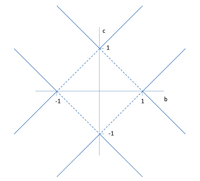 A recent paper by Jones-Smith and Mathur extends PT-symmetric quantum mechanics from bosonic systems (systems for which \(T^2=1\)) to fermionic systems (systems for which \(T^2=-1\)). The current paper shows how the formalism developed by Jones-Smith and Mathur can be used to construct PT-symmetric matrix representations for operator algebras of the form \(\eta^2=0\), \(\bar{\eta}^2=0\), \(\eta\bar{\eta}+\bar {\eta} =\alpha 1\), where \(\bar{eta}=\eta^{PT} =PT \eta T^{-1}P^{-1}\). It is easy to construct matrix representations for the Grassmann algebra (\(\alpha=0\)). However, one can only construct matrix representations for the fermionic operator algebra (\(\alpha \neq 0\)) if \(\alpha= -1\); a matrix representation does not exist for the conventional value \(\alpha=1\).
http://arxiv.org/abs/1104.4156
Subjects: High Energy Physics – Theory (hep-th); Mathematical Physics (math-ph); Quantum Physics (quant-ph)
Alexander G. Anderson, Carl M. Bender, Uriel I. Morone
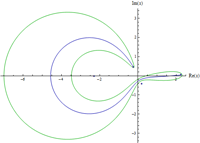 This paper revisits earlier work on complex classical mechanics in which it was argued that when the energy of a classical particle in an analytic potential is real, the particle trajectories are closed and periodic, but that when the energy is complex, the classical trajectories are open. Here it is shown that there is a discrete set of eigencurves in the complex-energy plane for which the particle trajectories are closed and periodic.
http://arxiv.org/abs/1102.4822
Mathematical Physics (math-ph); High Energy Physics – Theory (hep-th)
Carl M. Bender, Dorje C. Brody, Joao Caldeira, Bernard K. Meister
Suppose that a system is known to be in one of two quantum states, $|\psi_1 > $ or $|\psi_2 >$. If these states are not orthogonal, then in conventional quantum mechanics it is impossible with one measurement to determine with certainty which state the system is in. However, because a non-Hermitian PT-symmetric Hamiltonian determines the inner product that is appropriate for the Hilbert space of physical states, it is always possible to choose this inner product so that the two states $|\psi_1 > $ and $|\psi_2 > $ are orthogonal. Thus, quantum state discrimination can, in principle, be achieved with a single measurement.
http://arxiv.org/abs/1011.1871
High Energy Physics – Theory (hep-th); Mathematical Physics (math-ph); Quantum Physics (quant-ph)